India’s telecom infrastructure story has entered a different phase. The country is no longer only asking how fast towers, fibre and 5G sites can be deployed. The more important question is now how reliably this infrastructure can stay live, especially as connectivity moves deeper into rural, remote and commercially difficult regions.
For years, telecom tower operations in India have been a field-heavy business. A site goes down, an alarm is triggered, a technician is assigned, the local power issue is checked, a diesel generator is inspected, batteries are reviewed, the fault is escalated and eventually a ticket is closed. On paper, this is a standard field-service workflow. On the ground, it is far more complex.
India’s tower network operates across mountains, forests, flood-prone regions, dense urban clusters, rural belts and difficult border areas. Weather, terrain, staff availability, local language gaps, diesel logistics, power outages and delayed triaging can all affect uptime. These issues do not only impact maintenance. They also influence expansion planning whenever a tower company or telecom operator evaluates whether a new geography can be served economically.
This is why AI is becoming relevant not as a futuristic layer, but as an operational necessity.
The timing is important. India’s digital infrastructure targets are becoming more ambitious. The Department of Telecommunications has outlined goals including operational optical fibre connectivity to 2.70 lakh villages by 2030 with 95 percent uptime, broadband connectivity to 90 percent of anchor institutions such as schools, PHCs, and panchayat offices, and a national fixed broadband download speed average of at least 100 Mbps by 2030. As coverage ambitions expand, uptime becomes the real benchmark of digital inclusion.
TelecomTalk has recently reported how Airtel and Indus Towers are stepping up efforts to reduce diesel dependence at telecom sites. Airtel has solarised nearly 27,000 network sites over the last two years and now operates around 42,000 network sites with solar access, while working with Indus Towers to transition toward high-powered batteries and alternative energy sources. The same report also noted that frequent power outages and rising diesel prices are pushing operators and tower infrastructure providers to rethink energy operations.
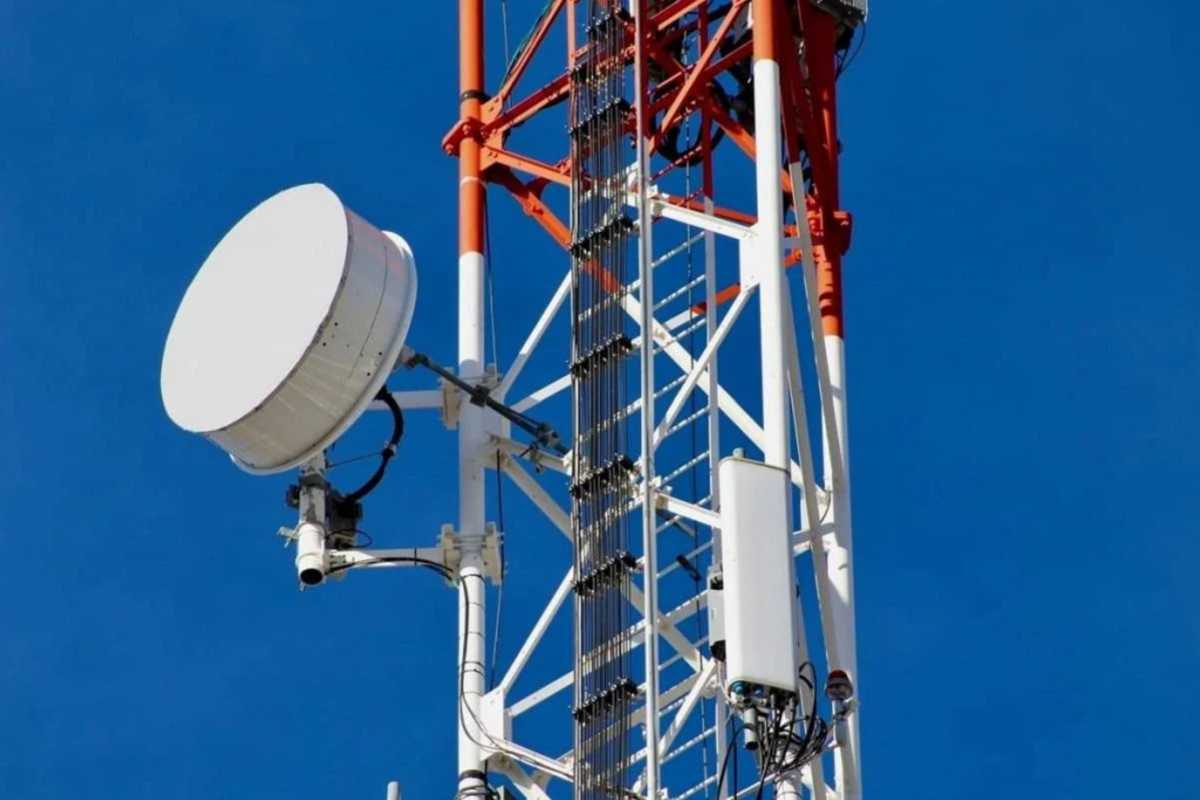
That energy transition is closely linked with AI-led uptime management. A telecom tower is no longer just a steel structure supporting radio equipment. It is a distributed infrastructure node with power systems, batteries, diesel generators, sensors, backhaul, site access, security issues and multiple vendor dependencies. When thousands of such nodes are spread across diverse geographies, manual monitoring and reactive maintenance are no longer enough.
The traditional maintenance model is reactive. A fault occurs, a ticket is created and the system waits for human intervention. Predictive maintenance changes this sequence. It uses data from batteries, diesel generators, site alarms, load patterns, weather conditions, historical breakdowns, fuel consumption, technician response times and equipment behaviour to predict the probability of failure before an outage happens.
Tech Mahindra’s whitepaper on AI for predictive maintenance in telecom networks states that AI-led predictive maintenance can reduce downtime by up to 50 percent, lower maintenance costs by 30–40 percent and improve overall network reliability. While exact outcomes will vary by deployment maturity and data quality, the direction is clear: telecom operations are moving from reactive ticketing to intelligent prevention.
This is where voice AI and agentic automation can add a practical layer. In India, field operations still depend heavily on phone calls, WhatsApp updates, vendor coordination and human escalation. A tower outage may require communication between a network operations centre, local field engineer, diesel vendor, security guard, power utility contact and regional manager. The delay is often not only technical; it is conversational and procedural.
Voice AI agents can call field technicians automatically, confirm availability, speak in local languages, collect site status, verify whether the technician has reached the location, ask structured diagnostic questions and update the ticket in real time. Agentic systems can go a step further by deciding the next best action based on predefined rules and live data. For example, if a site alarm indicates battery discharge and the weather forecast shows heavy rain in the area, the system can prioritise dispatch before the site fails. If a diesel generator has repeated start failures, the system can automatically escalate the case, arrange vendor intervention and flag the asset for replacement.
This is especially relevant in rural and difficult geographies. TelecomTalk earlier reported that Indus Towers has installed towers in challenging locations such as Leh, Ladakh, Tawang, Mechuka and Etalin in Arunachal Pradesh, with teams working in harsh conditions to execute deployment. The same report noted that Indus maintained network uptime of 99.98 percent compared to 99.96 percent in the previous quarter, while also increasing renewable energy adoption and reducing diesel consumption by 8 percent year-on-year in Q3.
Such numbers show the direction of the industry. The next improvement in uptime may not come only from more manpower or more diesel backup. It may come from better prediction, smarter dispatch and faster human-machine coordination.
Energy efficiency is also becoming a strategic priority globally. GSMA Intelligence notes that cost pressures and net-zero commitments have made energy efficiency important for mobile operators, infrastructure providers and tower companies. Its energy-efficiency benchmarking work includes participation from infrastructure providers and tower companies, reflecting the growing need to measure and improve tower operations through data.
For Indian tower companies, the opportunity is threefold.
First, AI can help reduce avoidable downtime. By analysing alarm patterns, battery health, diesel generator behaviour and power availability, the system can identify which sites are at risk before customers experience poor service.
Second, AI can reduce unnecessary truck rolls. Today, many site visits happen because the first diagnosis is incomplete. If the AI layer can classify faults more accurately and guide the field engineer before dispatch, companies can reduce wasted visits, fuel costs and response delays.
Third, AI can support expansion planning. If historical data shows that a region has repeated power instability, poor technician availability or high diesel logistics cost, tower companies can plan different backup models before installation. This could influence whether a site needs solar, lithium-ion batteries, a different vendor network, local technician onboarding or remote monitoring from day one.
This is not about replacing field teams. In telecom infrastructure, the physical world will always matter. Towers need people, tools, access, permissions and local presence. But AI can reduce the burden on humans by making every field intervention more informed.
In the next phase, a tower operations stack may look very different. Remote monitoring systems will collect live equipment data. Predictive models will detect risk. Voice AI agents will coordinate with field staff in local languages. Agentic workflows will create, prioritise and escalate tickets.
Dashboards will show not only current outages, but future risk zones. Over time, the system will learn which vendor responds fastest, which site fails during monsoon, which battery bank is deteriorating and which diesel generator is likely to fail during the next grid outage.
This is the move from uptime monitoring to uptime intelligence.
India’s telecom sector has already shown that it can deploy networks at massive scale. The next competitive advantage will belong to companies that can operate this scale intelligently. As 5G densification, rural broadband, fibre expansion, renewable energy adoption and critical digital services grow together, tower uptime will become central to India’s digital economy.
The industry has spent the last decade building coverage. The next decade will be about making that coverage resilient. AI will not be the only answer, but it may become the operating layer that connects alarms, assets, engineers, vendors and decisions into one intelligent uptime system.
For telecom tower companies, the question is no longer whether AI can support infrastructure operations. The question is how quickly AI can be embedded into the field-service backbone before downtime becomes more expensive than transformation.
Every article you read here is the result of time, research, and effort. If you feel it adds value, you can support TelecomTalk.
FAQs
Why is AI becoming important for telecom tower companies in India?
AI is helping telecom companies improve uptime, predict equipment failures before outages happen, reduce operational costs, and manage large-scale infrastructure more efficiently across remote and difficult regions.
What is predictive maintenance in telecom infrastructure?
Predictive maintenance uses AI and data analytics to monitor batteries, generators, alarms, weather patterns, and equipment behaviour to identify possible failures before they affect network services.
How can Voice AI help telecom operations?
Voice AI can automatically contact technicians, vendors, and site operators, collect updates in local languages, verify site visits, and update maintenance systems in real time, reducing delays in field operations.
Why are diesel and power management becoming major concerns for telecom towers?
Frequent power outages, rising diesel costs, and sustainability targets are pushing telecom operators to adopt solar energy, high-capacity batteries, and smarter energy management systems for tower sites.
What is the future of AI in telecom infrastructure management?
The future will likely involve intelligent uptime systems where AI predicts risks, automates ticket escalation, coordinates field teams, optimises energy usage, and improves decision-making for network expansion and maintenance.
 Support Telecomtalk