



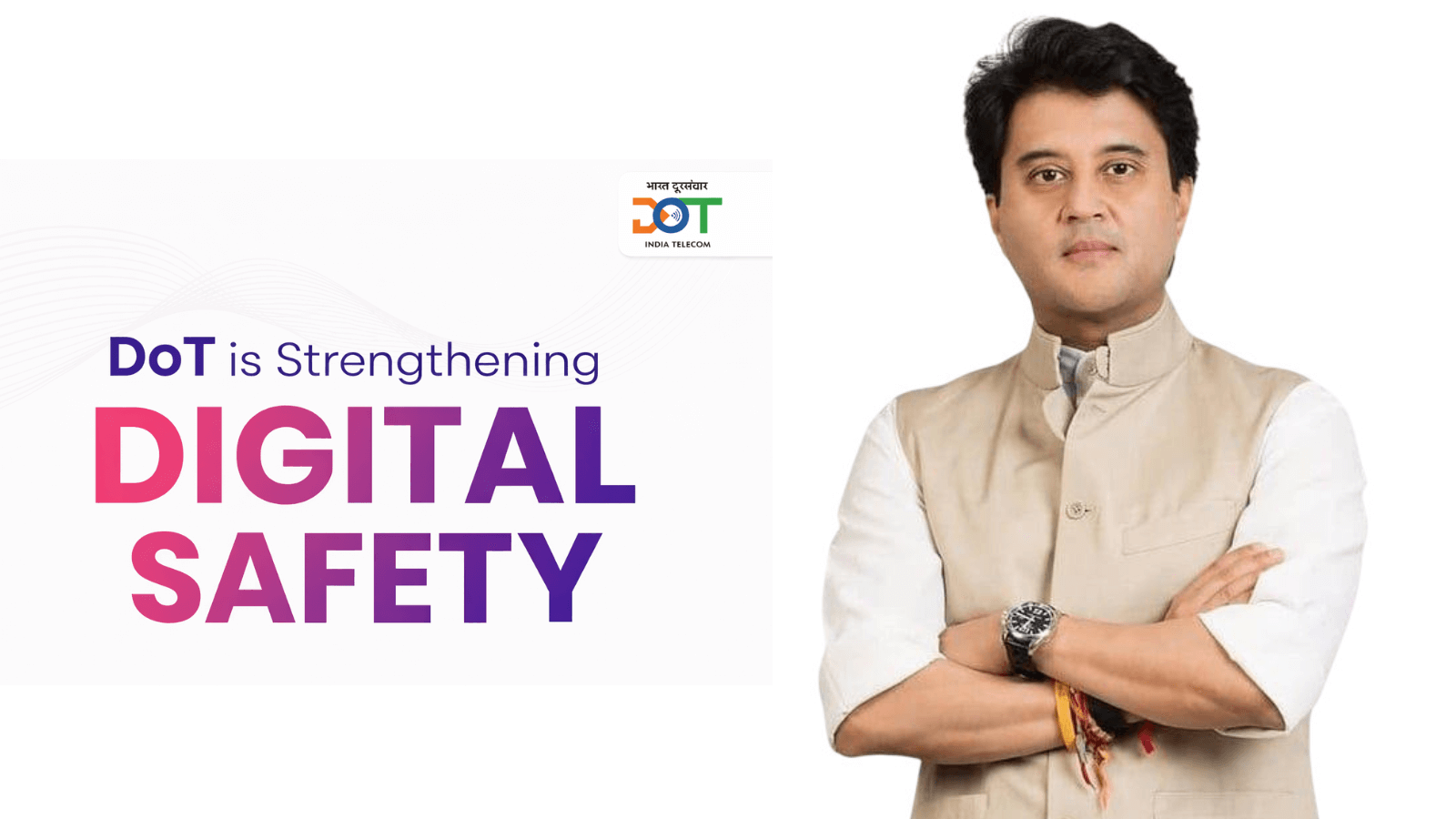
Over 88 lakh suspicious mobile connections have been disconnected, and potential financial frauds worth more than Rs 1,400 crore prevented, Union Minister for Communications Shri Jyotiraditya Scindia informed Parliament on Wednesday.
In a written reply in the Rajya Sabha, the Minister detailed how the government’s Digital Intelligence Platform (DIP) is being used to curb telecom-related fraud through AI-led monitoring and coordinated action among enforcement agencies, banks, and telecom operators.
Digital Intelligence Platform at the Core
The Digital Intelligence Platform (DIP) has been developed as a secure online system enabling real-time, bidirectional information sharing among key stakeholders to prevent misuse of telecom resources in cybercrime and financial fraud.
Also Read: 4G in Every Village of India by June 2026: Jyotiraditya Scindia
More than 1,200 organisations have been onboarded onto the platform. These include central security agencies, police departments across 36 states and Union Territories, the Indian Cyber Crime Coordination Centre (I4C), banks, UPI service providers, payment system operators, and telecom service providers.
Through DIP, stakeholders can flag mobile numbers suspected to be involved in fraudulent activity. The data is analysed by the Department of Telecommunications (DoT) and shared with relevant agencies for action.
AI Tool Identifies Suspicious Connections
One of the key systems under DIP is ASTR, an artificial intelligence and big data analytics tool designed to identify suspicious mobile connections.
According to the Minister, more than 88 lakh mobile connections have been disconnected after failing reverification checks. These numbers were identified as potentially being misused in cybercrime or financial fraud.
In addition, based on 7.93 lakh reports of suspected fraudulent communication submitted by citizens through the Sanchar Saathi platform, 39.53 lakh mobile connections have been disconnected.
Nearly 99% Reduction in Spoofed Calls
The government has also deployed the International Incoming Spoofed Calls Prevention System (CIOR) to tackle spoofed international calls displaying Indian mobile numbers.
Also Read: Airtel Says AI Now Handles Spam, Fraud, Customer Care and Even Tower Power
Since its commissioning on October 17, 2024, the system has delivered significant results, including blocking 1.35 crore spoofed calls within a 24-hour period. The Minister said the intervention has led to a nearly 99% reduction in spoofed calls using Indian calling line identification.
Calls that continue to reach international gateways are blocked at those points, strengthening the telecom network’s defensive layer.
Financial Fraud Risk Indicator Prevents Rs 1,400 Crore Loss
Another major initiative is the Financial Fraud Risk Indicator (FRI), launched in May 2025.
FRI assigns a risk category to suspicious mobile numbers, classifying them as medium, high, or very high risk of financial fraud. This enables banks, non-banking financial companies (NBFCs), and UPI service providers to prioritise enforcement actions and adopt real-time protection measures.
Such measures include transaction alerts, temporary delays, enhanced due diligence, warning notifications, or even transaction decline in high-risk cases. According to financial institutions, the use of FRI has helped prevent potential frauds amounting to over Rs 1,400 crore.
Coordinated Action Framework
The Department of Telecommunications shares analysed data with stakeholders in the form of a mobile number revocation list, which includes details of disconnected numbers, reasons for disconnection, and dates of action taken.
Stakeholders, in turn, submit action taken reports and share additional suspicious numbers, creating a continuous intelligence-sharing loop.
The Minister said these coordinated and technology-driven measures have significantly strengthened the country’s citizen protection framework against telecom-enabled fraud, as India moves toward a more AI-driven and risk-based digital security system.