Support Telecomtalk







Andrew Bonwick
Vice President of Product Development at Relm Insurance

Madhav Sheth
CEO of Ai+ Smartphone

Stephen Rose
CEO Render Networks



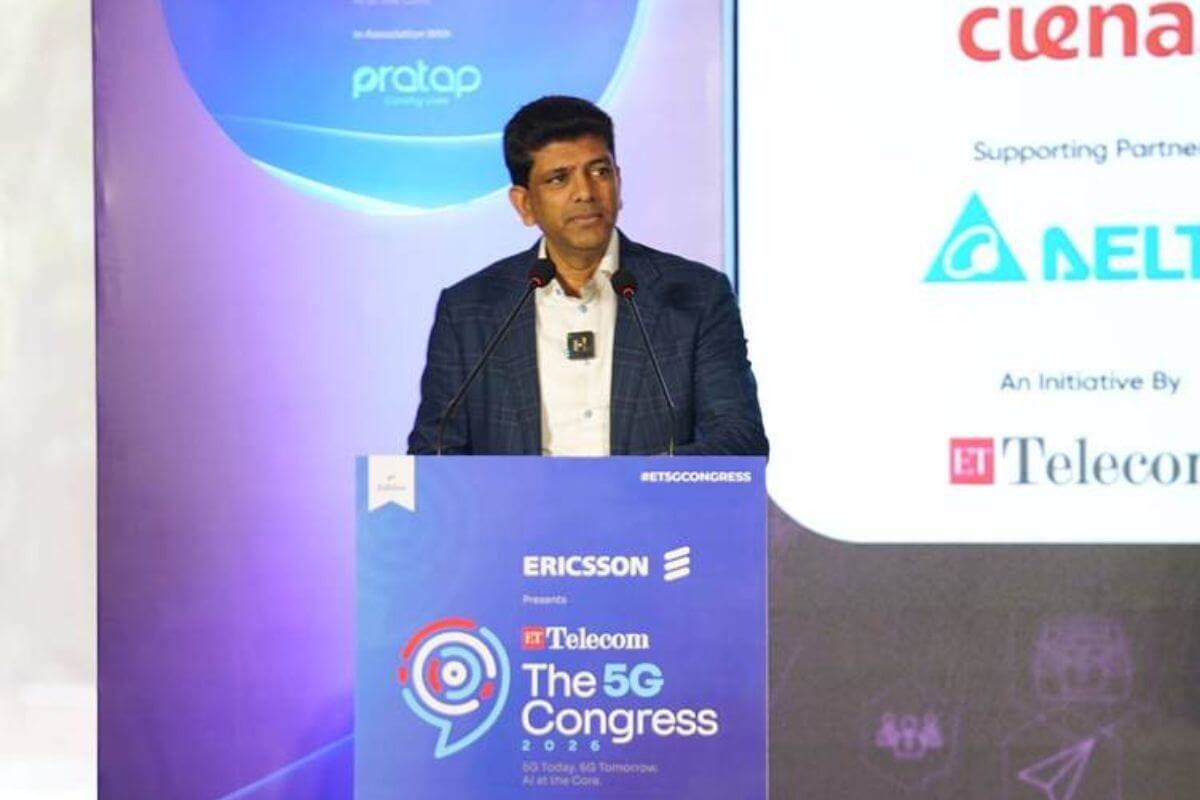
Pemmasani Chandra Sekhar, Minister of State for Communications, on Friday said India is on track to reach 1 billion 5G users by 2031, highlighting the country’s rapid strides in next-generation telecom technologies. Addressing the ET Telecom 5G Summit in New Delhi, he noted that India is advancing with a clear roadmap to emerge as a global leader in 5G and future 6G ecosystems, according to an official statement from the Ministry of Communications dated March 20, 2026.
- Make Telecom Talk My Trusted Source



Policy Reforms Fuel Telecom Growth
He attributed the sector’s strong growth to decisive policy reforms and proactive governance. Measures such as the redefinition of Adjusted Gross Revenue (AGR), removal of Spectrum Usage Charges (SUC), and rationalisation of bank guarantees have significantly improved the financial viability of telecom operators, enabling large-scale investments in 5G infrastructure.



Infrastructure Push Accelerates 5G Rollout
He noted that complementary reforms—including streamlined Right of Way (RoW) permissions, improved spectrum management, protection of telecom infrastructure, and simplified wireless licensing—have further accelerated network expansion and service delivery.
Underscoring a shift in governance, the minister said the Department of Telecommunications has adopted an outcome-oriented approach and embraced private sector–like efficiency, emphasising speed, accountability, and execution.
Continuous engagement with stakeholders—ranging from telecom service providers, startups, vendors, contractors, and state governments—has helped address bottlenecks in infrastructure rollout, permissions, and last-mile connectivity through time-bound solutions. Regular reviews and real-time monitoring have strengthened on-ground implementation.
Rural Connectivity Gains Momentum
On rural connectivity, he said nearly 35,000 remote villages are being connected through 4G networks, with Bharat Sanchar Nigam Limited (BSNL) playing a key role in enhancing infrastructure and improving network uptime to 90–95 percent in several regions.