Camera quality stands as one of the most important factors that can make or break a consumer’s smartphone buying decision these days. We’ve seen smartphone brands come up with exciting new techniques and features to make smartphone cameras faster and better every passing year.
Make Telecom Talk My Trusted Source
Generally, the camera sensor size and its quality is attributed most towards the image quality. The larger, the better they say. I am not downplaying the importance of lens, autofocus system or the image post-processing. Nokia gives a lot of importance to camera quality in its smartphones. We’ve seen Nokia N8, Nokia 808 PureView and the Nokia Lumia 1020 grabbing the best-smartphone camera awards and that is because the use of larger sensors and custom made lenses. But all of them had huge humps on their backs and can’t be considered as very stylish.
Last year, Sony came up with a large 1/2.3 inch camera sensor in the Xperia Z1. The Exmor RS camera sensor with Sony G lens was big enough for good image quality (at least when smartphone cameras are concerned) and small enough to be able to fit inside a 8.5 mm slim casing. But as they tried to cram a lot of pixels (20.1 MP) in a small sized sensor, it suffered with image noise.
Samsung has come up with a 1/2.6 inch ISOCELL camera sensor in the Galaxy S5 which improves to keep the image noise down to acceptable levels. It also brought a first-ever ‘Phase Detection Autofocus System’ in a smartphone for faster autofocus. LG came up with additional IR sensors to assist the already existing phase detection AF system in the LG G3. This results in faster than ever (and accurate) autofocus system in a smartphone.
But the image quality can only be improved up to a limit using all these existing technologies. But Lytro released the first ever consumer focussed light-field camera. 4D light-field cameras use a unique array of lenses to capture 4D light-field information. This extra light information can be used to refocus images after they are captured. This also cuts out the time taken by a camera to focus on a particular subject.
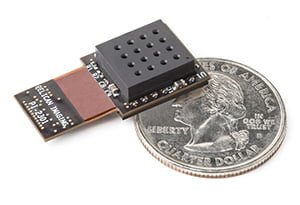
This new light-field camera technology might be used in smartphones starting next year. Lytro is working on an Android based light-field camera which could be released as soon as next quarter. Nokia has invested in Pelican Imaging which is working to bring light-field camera technology to smartphones. According to Pelican, their new “industry’s thinnest high-resolution camera” will help in making smartphones even thinner without compromising on image quality. Although, Pelican Imaging has clarified that even though Nokia is an investor, their smartphone camera technology will not end up being exclusive to Nokia Lumia smartphones. We might see other brands using these new camera sensors in their flagship smartphones starting next year. Not only this, Pelican is promising the ability to record 3D videos using its smartphone camera sensor.
Pelican 4×4 Smartphone Camera Image Sensor Module
But Pelican is not the only player focussing on this market opportunity. Toshiba is working on a similar camera sensor which they announced back in late 2012. Although, no technology is perfect. Light-field cameras have been generally known to provide low image resolution which could be a disaster, especially with all the smartphones and tablets these days which are being equipped with QHD screens. The initial set of buyers have expressed concerns about image quality under low-light conditions using cameras from Lytro.
What do you think about the advancement of camera technologies in smartphones and tablets these days? Are you satisfied with the camera in your existing smartphones? Do you think these light-field cameras will give you the image quality that you’ve always expected from a flagship smartphone?
If this article saved you time or helped you decide better, consider supporting our work.
 Support Telecomtalk