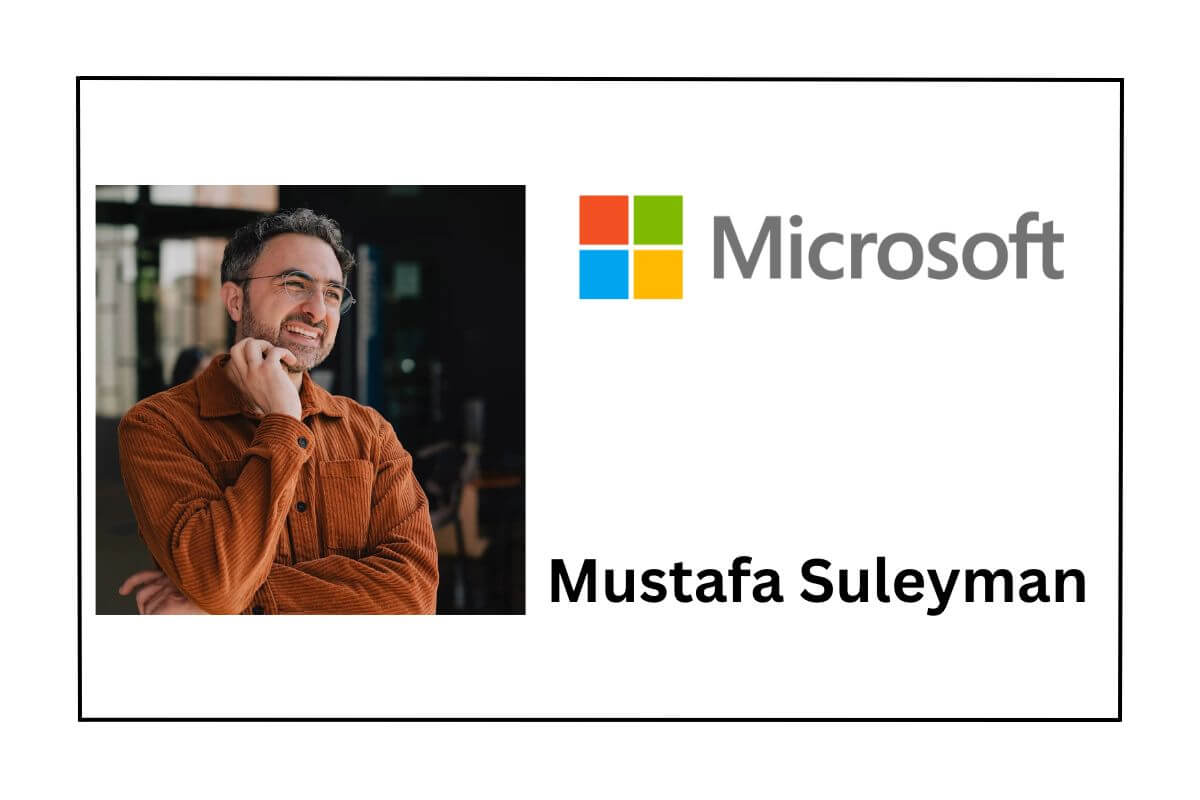
Microsoft CEO Satya Nadella announced in March 2024 the joining of Mustafa Suleyman after co-founding DeepMind and Inflection to form a new organization called Microsoft AI, focused on advancing Copilot and other consumer AI products and research.
While announcing Copilot, an AI companion for everyone, on April 4, 2025, Suleyman said: “Copilot is more than an AI, it’s yours. It remembers not just what you said, but who you are. Copilot helps you stay organized, think clearly, learn more intuitively. It’s there when you need a quick factual answer, a long exploratory debate or when you fancy just downloading after a hard day.”
On November 6, 2025, announcing the formation of “Superintelligence Team” to build “Humanist Superintelligence”, Suleyman said “Humanist superintelligence is advanced AI designed to remain controllable, aligned, and firmly in service to humanity. It’s AI that amplifies human potential, not replaces it.”
In his note on the same day, titled Towards Humanist Superintelligence, Suleyman, explaining the formation of a new team, said: “At Microsoft AI, we’re working towards Humanist Superintelligence (HSI): incredibly advanced AI capabilities that always work for, in service of, people and humanity more generally. We think of it as systems that are problem-oriented and tend towards the domain specific. Not an unbounded and unlimited entity with high degrees of autonomy – but AI that is carefully calibrated, contextualized, within limits. We want to both explore and prioritize how the most advanced forms of AI can keep humanity in control while at the same time accelerating our path towards tackling our most pressing global challenges.”
“To do this we have formed the MAI Superintelligence Team, led by me as part of Microsoft AI. We want it to be the world’s best place to research and build AI, bar none. I think about it as humanist superintelligence to clearly indicate this isn’t about some directionless technological goal, an empty challenge, a mountain for its own sake. We are doing this to solve real concrete problems and do it in such a way that it remains grounded and controllable. We are not building an ill-defined and ethereal superintelligence; we are building a practical technology explicitly designed only to serve humanity.”
“When you hear about AI, then, this is what it’s worth keeping in mind. This is about making us collectively the best version of ourselves. AI is the path to better healthcare for everyone. AI is how our society levels up, escapes an increasingly zero-sum world. It’s how we grow the economy to increase wealth broadly, and enable a higher standard of living across society. Or let me put it another way: take AI out of the picture and the gains over the next decades look much harder to come by. It’s the next step on the long road of human creativity and invention, pushing the boundaries of what we can make, think and do. It’s how we discover new kinds of energy generation, new modes of entertainment.”
Also Read: What They Said: Puneet Chandok of Microsoft on AI
What Is Humanist Superintelligence?
Explaining Humanist Supetintelligence, he said:
“Humanist superintelligence (HSI) offers an alternative vision anchored on both a non-negotiable human-centrism and a commitment to accelerating technological innovation… but in that order. The order is key. It means proactively avoiding harm and then accelerating.
Instead of being designed to beat all humans at all tasks and dominate everything, HSI begins rooted in specific societal challenges that improve human well-being. Our recent paper on expert AI medical diagnosis is a great directional example of this.
It’s clearly showing signs of progress towards a medical superintelligence and when it makes its way into production it will be truly transformational. And yet since it’s envisaged as a more focused series of domain specific superintelligences, it poses less severe alignment or containment challenges.
Quite simply, HSI is built to get all the goodness of science and invention without the “uncontrollable risks” part,” he said.
December 2025:
Speaking on the Moonshots with Peter Diamandis podcast dated December 16, 2025, Suleyman emphasized that the massive capital required for these components gives large, established corporations a distinct structural advantage. Suleyman highlighted that the financial burden extends beyond hardware to the fierce competition for human capital, particularly AI researchers, data scientists, and engineers.
Given the high costs involved in keeping pace with AI development, Suleyman said on the podcast that “it’s hard to say” whether startups can compete with Big Tech. “The ambiguity is what’s driving the frothiness of the valuations. If suddenly we do have an intelligence explosion, then lots of people can get there simultaneously,” Suleyman explained.
Suleyman has warned companies of the high investments they face to lead the AI race. He claimed that competing at the top level of AI will require an investment of “hundreds of billions of dollars” to keep up at the frontier over the next five to ten years, including costs for infrastructure, hardware, and specialised talent.
“Not to mention the prices that we’re paying for individual researchers or members of technical staff,” he noted, referring to the salaries in the AI sector. He also compared Microsoft’s current role to that of a “modern construction company,” with hundreds of thousands of workers dedicated to building gigawatts of CPUs and AI accelerators.
Mustafa Suleyman has said his mission is to make Microsoft “self-sufficient” in developing its frontier models and to build “an absolutely world-class superintelligence team.” “We’re absolutely pushing for the frontier,” Suleyman said. “We want to build the best superintelligence and the safest superintelligence models in the world.” Suleyman said last month that his team is “trying to build a humanist superintelligence” — one that is aligned with human interest.
Artificial general intelligence, or AGI, refers to AI systems that can match human intelligence across most tasks. Superintelligence goes a step further — systems that surpass human abilities.
Containment, Alignment, and Red Lines for AI Development
Suleyman has warned that the company will abandon any artificial intelligence system that threatens to “run away from us,” staking out what he calls a “novel position” in an industry racing toward superintelligence. In a recent interview with Bloomberg dated December 12, 2025, he opened up about Microsoft’s approach to “humanist superintelligence”—AI systems that are strictly designed to serve human interests rather than operate autonomously. “We won’t continue to develop a system that has the potential to run away from us,” he stated, emphasizing that containment and alignment are “necessary prerequisites” and “red lines” before releasing superintelligent tools.
To a question on whether Suleyman used AI for autonomous tasks—such as booking tickets or buying a gift—he reportedly replied: “We’re still experimenting. It can do it. It doesn’t always get it right. It’s in ‘dev mode,’ so not generally available just yet.
When it does work, it is the most magical thing you’ve ever seen. It essentially types stuff into your browser, clicks on buttons, opens up new tabs. It can look at your history, [and] personalize the purchase or the response to you.”
Explaining the term superintelligence, Suleyman reportedly said: “Superintelligence in the industry today means an AI system that can learn any new task and perform better than all humans combined, at all tasks. It is a very high bar and, at the moment, it comes with a great deal of risk. It’s very uncertain how we would contain and align a system that is so much more powerful than us.
The framing I prefer is one of a humanist superintelligence — one that is always in our corner, on our team, aligned to human interests. Until we can prove that it will remain safe, we won’t continue to develop a system that has the potential to run away from us. Everybody should agree to that. Yet I think it’s a novel position in the industry at the moment.”
Also Read: What They Said: K Krithivasan of Tata Consultancy Services on AI
Medical Superintelligence and Transformative Use Cases
To a question on whether the first uses of superintelligence are going to be in the medical field, Suleyman reportedly said: “I think so. This is probably the most exciting application of superintelligence. We now have systems that can diagnose any rare condition found in the literature, significantly better than human performance, more cheaply, with fewer tests and with higher accuracy. We are putting it through independent peer review at the moment and soon there’ll be clinical trials. So this is very, very, very exciting.”
Suleyman reportedly said he believes technology is here to serve us. “It should make our lives better, make us more comfortable. One day, I think it is going to help us to live longer. It’s going to give us the option to work less if we choose to. It’s going to produce abundance. We have to make conscious decisions to use it for those applications first.”
Speaking about AI and work, he said: “It is inevitable that at some point over the next 20 or 30 years, machines are going to be more capable than humans at doing most work — that might come much sooner.
We have to decide as a society what our purpose is. We have to be very thoughtful about the rate of introduction of new machines, because we have to make sure that displacement is counterbalanced with a mechanism to fund people and to support people through a massive transition.”
He also added, “I really want to nail medical superintelligence. I want to do more in energy efficiency and battery storage — developing new compounds for renewables. I think that AI will really transform the energy industry.
I’m actually very proud of a lot of the use cases in Copilot. Many people are using it for companionship, therapy, and making difficult life decisions. It’s given me high-quality access to information and emotional support, and is helping keep me organized.”
AI Reporters
Speaking about AI reporters, he reportedly said: “There are going to be AI reporters. I run MSN at Microsoft; it’s one of the largest news sites on the planet. One of the things I’m very excited about is how AI reporters can reinvigorate local news. Imagine there are hundreds of thousands of AI reporters that can make phone calls to people who are at the scene, who can verify eyewitness footage, conduct interviews, stitch those together into little montages, and not just do it for big national stories, where the investment is justified, but do it at a very local level — to provide accurate and factually reliable information.”
Also Read: What They Said: Preeti Lobana of Google India on AI
AI Companionship and Emotional Support
For emotional guidance to advice, AI chatbots have become a source of constant, judgment-free support. While several AI experts and users raise concerns about chatbots being used for personal and emotional support, Microsoft AI head Mustafa Suleyman, on Mayim Bialik’s Breakdown podcast dated December 16, 2025, said that it offers a safe space to “detoxify ourselves” and offload emotions.
Suleyman has defended the growing use of AI chatbots for emotional support, offering real benefits. He said chatbots can be “a way to spread kindness and love and to detoxify ourselves so that we can show up in the best way that we possibly can in the real world, with the humans that we love.”
“The downside of this, which of course makes me scared, is that there’s definitely a risk of dependency. It raises the bar for human experience because it’s an always-on, highly patient, very kind and supportive companion. It’s extremely knowledgeable, remembers what you’ve said, and over time makes you feel seen and understood in ways that other humans often can’t. That’s a very hard thing to do. Maybe your best friends or your partner can, but even then, it’s tough.”
Suleyman explained that AI chatbots allow users to express themselves freely without fear of shame or judgment.
While emphasising that this does not replace professional therapy, Suleyman said the unintended outcome has been meaningful. “That’s not therapy. But because these models were designed to be non-judgmental, non-directional, and with non-violent communication as their primary method—which is to be even-handed, to have reflective listening, to be empathetic, to be respectful—it turned out to be something that the world needs,” he said. According to him, these traits—empathetic listening, even-handed responses, and respect—have made chatbots a major source of emotional support.
Suleyman further stated that AI chatbots have evolved into a primary source of support. People are not only having late-night conversations with chatbots but are also talking about personal topics like breakups and family issues, making it one of the most popular AI use cases.
This is a developing story, and more quotes and insights from Mustafa Suleyman will be added as they become available.
Every article you read here is the result of time, research, and effort. If you feel it adds value, you can support TelecomTalk.
 Support Telecomtalk