Support Telecomtalk







Andrew Bonwick
Vice President of Product Development at Relm Insurance

Madhav Sheth
CEO of Ai+ Smartphone

Stephen Rose
CEO Render Networks



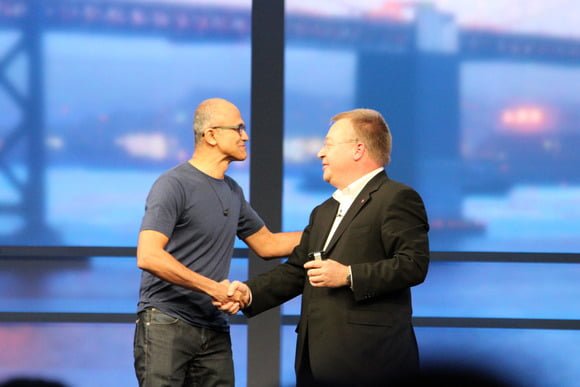
Eight months after the announcement that Microsoft will acquire Nokia’s devices and services business for around $7.2 billion, Microsoft has now completely acquired Nokia’s said divisions and related infrastructure today (except its manufacturing plants in Chennai and Korea). Nokia’s will now be a completely owned, separately functioning subsidiary of Microsoft. Microsoft will own ‘Lumia’ and ‘Asha’ brands. Nokia is barred from using its brand name on any mobile device for the next 10 years. Nokia Oyj will now be renamed to Microsoft Mobiles Oy. But the move will not be completely physical. All the Nokia employees will still be working in the same place as earlier instead of shifting to Microsoft offices.
- Make Telecom Talk My Trusted Source



Nokia, as a company, will not be vanished though. It will still own NSN (mobile network infrastructure division), HERE services and Advanced Technologies divisions. Microsoft will pay Nokia for a 4-year license of HERE services which they plan to keep exclusive to its smartphone platform.
Microsoft has always been known as a software company. But now, Microsoft will now be in total control of nearly 90% of total Windows Phone devices that are being sold throughout the world. Microsoft is now officially the second largest mobile phone brand in terms of sales, after Samsung. But there would be a bunch of problems that Microsoft would face after this grand acquisition. It will be forced to take clear steps and reveal its long-term plans to investors as well as consumers in general.
- How would it distinguish between Microsoft Mobiles and its other Windows Phone partners?
- Whether to keep alive Nokia X Android smartphones or not?

-