This makes the phone book much more dynamic than just a list of names and numbers. Services such as Phonebook 2.0, which significantly enhance the mobile user experience by making full use of the capabilities that 3G provides, are sure to succeed in India as well.
Furthermore, the higher speeds and variety of multimedia content will allow providers to offer a plethora of games that are currently limited by the narrow bandwidth. Gaming will be enriched if users are able to discover games of their preference more easily and share the experience with friends. 3G will enable operators and VAS providers to offer this to users. Additionally, 3G will make 3D games and superior visual effects a reality.
This has, until now, been restricted to users with expensive, high-performance computers. However, the experience can be brought to the mobile screen if 3G speeds and feature-rich handsets are made available at affordable rates.
Video streaming will also experience a surge along with high speed downloads of RBT tunes and music. It will also boost mobile advertising. Essentially, 3G will drive the convergence between mobile and internet platforms as mobile proliferation is much higher than PC penetration in India.
TT : How much is the percentage growth application industry looking after launch of 3G?
According to the Federation of Indian Chambers of Commerce and Industry (FICCI), in India, the 3G subscriber base is expected to hit 90 million by 2013, accounting for 12% of the overall wireless user base. By 2013, 3G service revenues are expected to generate $15.8 billion, accounting for a share of 46% in overall wireless service revenue. Since 3G will open up the bandwidth for delivery of applications, this particular sector will experience unfettered growth.
We must also consider that operators have invested nearly Rs 7,000 crore in spectrum and are looking to monetize their 3G offerings as soon as possible. Analysts, in fact, estimate that it will take five years for operators to break even. The only way operators can utilize the full potential of their investment is by offering new, innovative services and applications. This will drive the growth of the application industry as well.
TT: Who would be the major target customers for 3G app’s.
The major target customers for 3G applications initially would be high end segment of the market which is 10% of the total market. Apart from this segment, mobile subscribers with postpaid connections and disposable income would form part of the target group. Customers for 3G apps can also include rural subscribers if applications which add significant value to their day-to-day lives are offered.
According to the department of telecom, approximately 2.5 lakh villages are expected to be connected to 3G networks by 2012. If this succeeds, we can offer not just revolutionary entertainment services, but also make a real difference by offering telemedicine, education and other services to areas which have low PC penetration and limited broadband access. For instance, our current English tutorial service could have a higher impact if we can take advantage of the multimedia capabilities that 3G will provide.
Having said that, the biggest driver for uptake of 3G applications will be the availability of competitive data plans and inexpensive feature phones. These factors will contribute significantly to the revolution that 3G can potentially bring in.
TT: What could be the ratio of free Vs Paid apps?
While each operator will offer a mix of paid and free applications, the current app marketplaces demonstrate a 60-40 ratio of free vs paid apps. Operators will certainly look to drive revenues from usage of the 3G network by offering free applications. However, as developers look to monetize their products, it can be expected that there will be a number of paid applications as well. In fact, apps that truly enrich the mobile user experience will always find takers, even if they are available at a cost.
If this article saved you time or helped you decide better, consider supporting our work.
 Support Telecomtalk










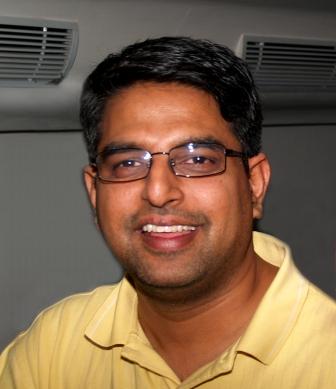 On our latest buzz about VAS, 3G, Smartphones and Mobile app’s Telecom Talk’s took the next step and went in talk with Mr. Mouli Raman, CTO & Co-Founder, OnMobile.
































