 Support Telecomtalk







Andrew Bonwick
Vice President of Product Development at Relm Insurance

Madhav Sheth
CEO of Ai+ Smartphone

Varun Kashyap & Sridevi Reddy
Co-Founders, Zithara.ai
Transforming Indian Offline Retail and Customer Engagement Using AI


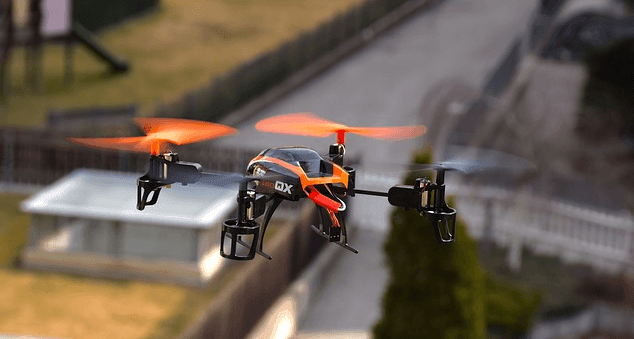
After a long wait, the government has finally announced a policy and guidelines for drones, also known as remotely piloted aircraft. The new policy, which will come into effect from December 1 will be aiming to open up a plethora of opportunities in the Indian civil aviation sector. Unveiling the “Drone Regulations 1.0“, Civil Aviation Minister Suresh Prabhu said that these would help foster technology and innovation in the development of drones — which have an extensive range of applications ranging from disaster relief, aerial surveys and in agriculture to precision logistics.
- Make Telecom Talk My Trusted Source



“The drone market in India holds the potential of hitting over $1 trillion. We plan to develop drone manufacture not only for the domestic market but to cater to the global market as well,” Prabhu said, adding that India’s expertise in technology is characterised by its capacity to devise low-cost solutions.
The Minister said that the global drone regulations unveiled had taken several years in the making in order to sort out various issues of safety and security. Minister of State for Civil Aviation Jayant Sinha said that Drone Regulations 1.0 had been formulated as an “all-digital process” that will become effective from December 1, when the “Digital Sky” platform will become operative to put in place a system that is totally online.
“The Digital Sky platform will be a first national unmanned traffic management platform that implements ‘no permission, no takeoff’ for remotely piloted aircraft,” Sinha said, according to IANS.
Users will be required to make one-time registration of their drones, pilots and owners on the platform, which will also allow for the online filing of a drone’s specific flight path and use. “The Drone Regulations 1.0 will enable the safe, commercial usage of drones starting December 1. The regulations are intended to enable visual line-of-sight, daytime-only and a maximum of 400-feet altitude operations,” Sinha said.






























