 Support Telecomtalk







Andrew Bonwick
Vice President of Product Development at Relm Insurance

Madhav Sheth
CEO of Ai+ Smartphone

Varun Kashyap & Sridevi Reddy
Co-Founders, Zithara.ai
Transforming Indian Offline Retail and Customer Engagement Using AI


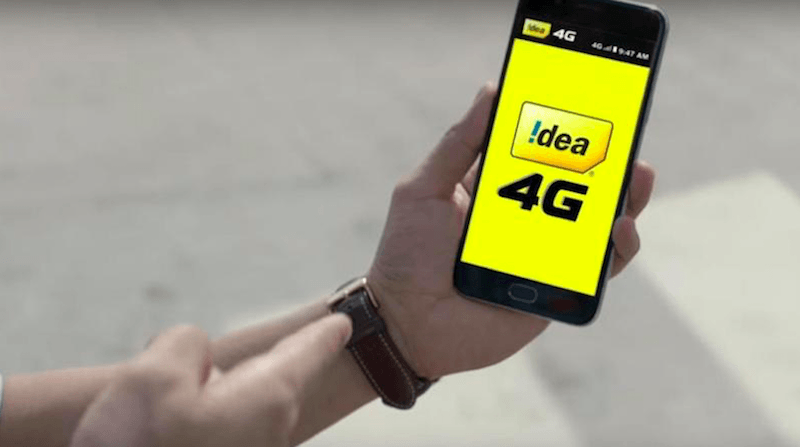
Starting from the 1G analogue transmission method, now the networks have evolved to 4G standards which not only facilitate digital data and voice transmission, but they also do so at very fast speeds. However, in the evolution of telecom technologies like 2G, 3G, 4G, VoLTE etc. very few people understand the underlying implication of these technologies. It is vital that customers understand what technology they are paying for and what technologies are set to show up next in the market. Below we have demarcated different networks along with their specialities.
- Make Telecom Talk My Trusted Source



The Leap from 3G to 4G – Changes
In a short way, the best answer would be to simply say that the speeds have been significantly improved on the 4G network when compared to the 3G network. While the mobile devices are going through some serious technological breakthrough, it is obvious that they would need high-speed bandwidth to facilitate these functions, thus 4G came into existence. To give a clear picture to the readers, while the 3G network supports speeds up to 5 Mbps to 20 Mbps, the 4G network supports speeds of up to 150 Mbps, at least on paper.
The Technology Powering 4G
Although the actual technicalities of the working of the 4G network are quite complicated. It should suffice to tell you that 3G brought some internet speed changes over the 2G network, however, it did not bring significant improvements over calling or voice. That was not the case in the 4G network where voice calling saw a major improvement in both quality and reliability. 4G facilitates connecting calls over data. This is something which the 3G network wasn’t capable of doing.
Reliance Jio’s early entry into the market has given it an upper hand in terms of obtaining IP based technology for calling and it has also claimed its ownership on the LTE+ which is a more advanced and faster version of 4G. The LTE+ uses two bands to send data at the same time, resulting in lesser congestion and better throughput speeds. In other countries, LTE+ is also known as LTE-A, where A refers to ‘Advanced’.