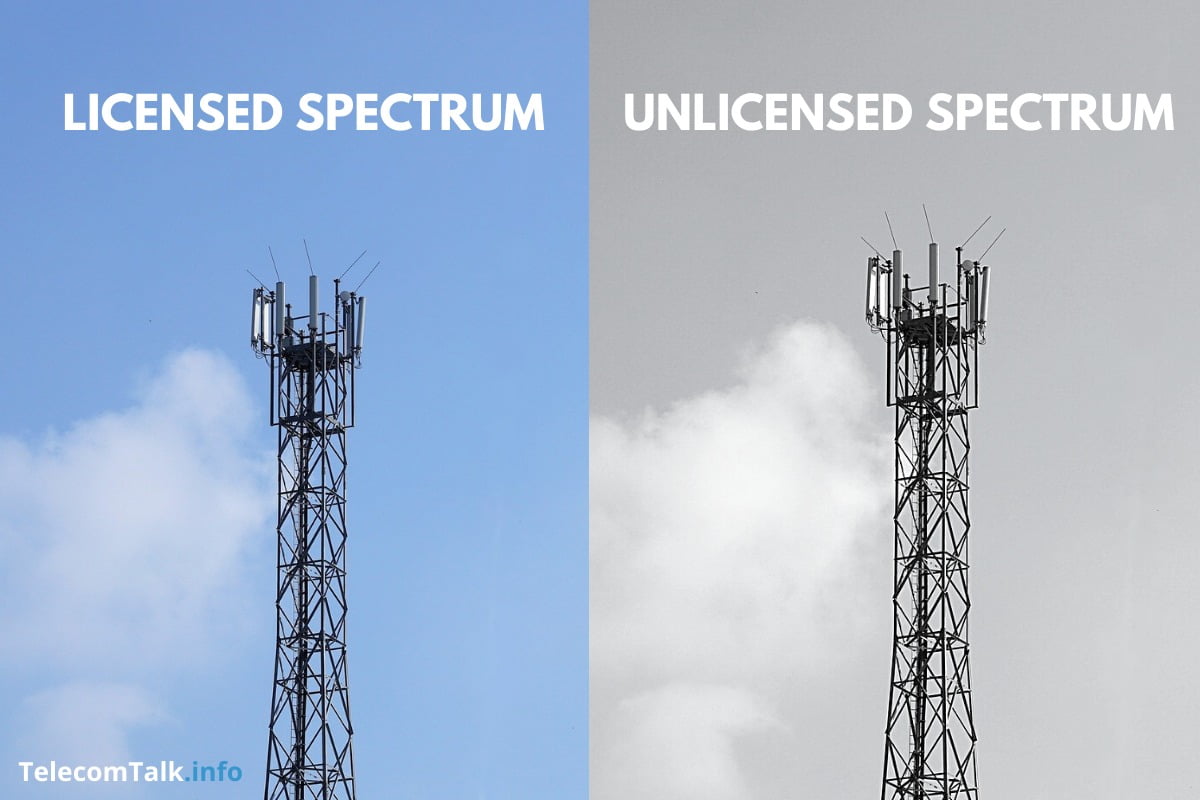
Spectrum is one of the powerful resources that is shaping the tech industry. Since 5G is on the shore, it has become more important than ever for countries to allocate spectrum effectively and efficiently. In case you are not aware, spectrum is a range of radio waves that are used for communication purposes. In general, the spectrum is divided into two categories which are licensed and unlicensed spectrum. Follow the article to the end for a detailed guide regarding licensed and unlicensed spectrum.
Spectrum is a finite resource, and its efficient allocation is crucial to facilitate newer technologies in future, just like 5G. When mobile network operators (MNO’s) take special licenses to operate with dedicated parts of the radio spectrum bands, it comes under the licensed spectrum. Except, the license holder, no other operator is allowed to use that part of the spectrum band for any purpose. Since the mobile network operators have full rights over the radio spectrum, it will enable them to offer high and reliable transmission speed along with data security and stability.
On the other side, the unlicensed spectrum is not owned by any specific mobile network operator. There are no rules associated with spectrum access. Nearly all the operators can use the spectrum band and deploy their services. Even though unlicensed spectrum offers flexibility, there are macro risks of interference and security in the network.
LPWA Technologies Differences Deployed on Licensed and Unlicensed Spectrum
There are two different LPWA (low-power, wide-area) technologies that are deployed in the licensed spectrum. The technologies are known as LTE-M and NB-IoT. Both the technologies are dubbed to be part of the 5G mMTC which will enable mass IoT. Also, LTE-M and NB-IoT are based on the standards set by 3GPP. The LPWA technologies that are used in unlicensed spectrum are LoRA and Sigfox. Both the technologies are said to be effective on the unlicensed bands that are used by multiple mobile network operators.
Security Differences Between Licensed and Unlicensed Spectrum
Since licensed spectrum are owned by specific mobile network operators, it may be slightly difficult for hackers to breach the network and create a hassle. Even though the unlicensed spectrum is flexible, there might be a slight possibility of a data breach. However, being a sovereign asset, the government ensures that both the spectrum categories are safe and secured. To secure the radio bands, special radio jammers are used to avoid hacker attacks.
Advantages and Disadvantages of Licensed Spectrum
One of the biggest advantages that mobile network operators get from the licensed spectrum is efficiency. Licensed spectrum bands offer more flexibility to the operator in deploying their network to manage interference. As of disadvantage, other than the licensee, no one has the right to offer services in the licensed spectrum. The user gets totally dependent on the mobile network operator.
Advantages and Disadvantages of Unlicensed Spectrum
Since unlicensed spectrum is free for all, users are not dependent on a single mobile network operator to use an unlicensed spectrum. However, talking about disadvantage, interference management between adjacent users is slightly difficult than the licensed spectrum.
Every article you read here is the result of time, research, and effort. If you feel it adds value, you can support TelecomTalk.
 Support Telecomtalk