Bharti Airtel’s Rs 49 and Rs 99 unlimited data packs may look similar at first glance, but a closer comparison reveals a carefully structured approach to how mobile data is being consumed today. Rather than competing purely on price or volume, these packs are built around duration, flexibility, and high-intensity usage windows – a shift that reflects changing user behaviour across India’s mobile ecosystem.
At a time when telecom operators continue to focus on larger recharge plans and bundled benefits, Airtel’s short-term packs point to a more targeted strategy one that aligns data access with specific usage needs rather than long-term commitments.
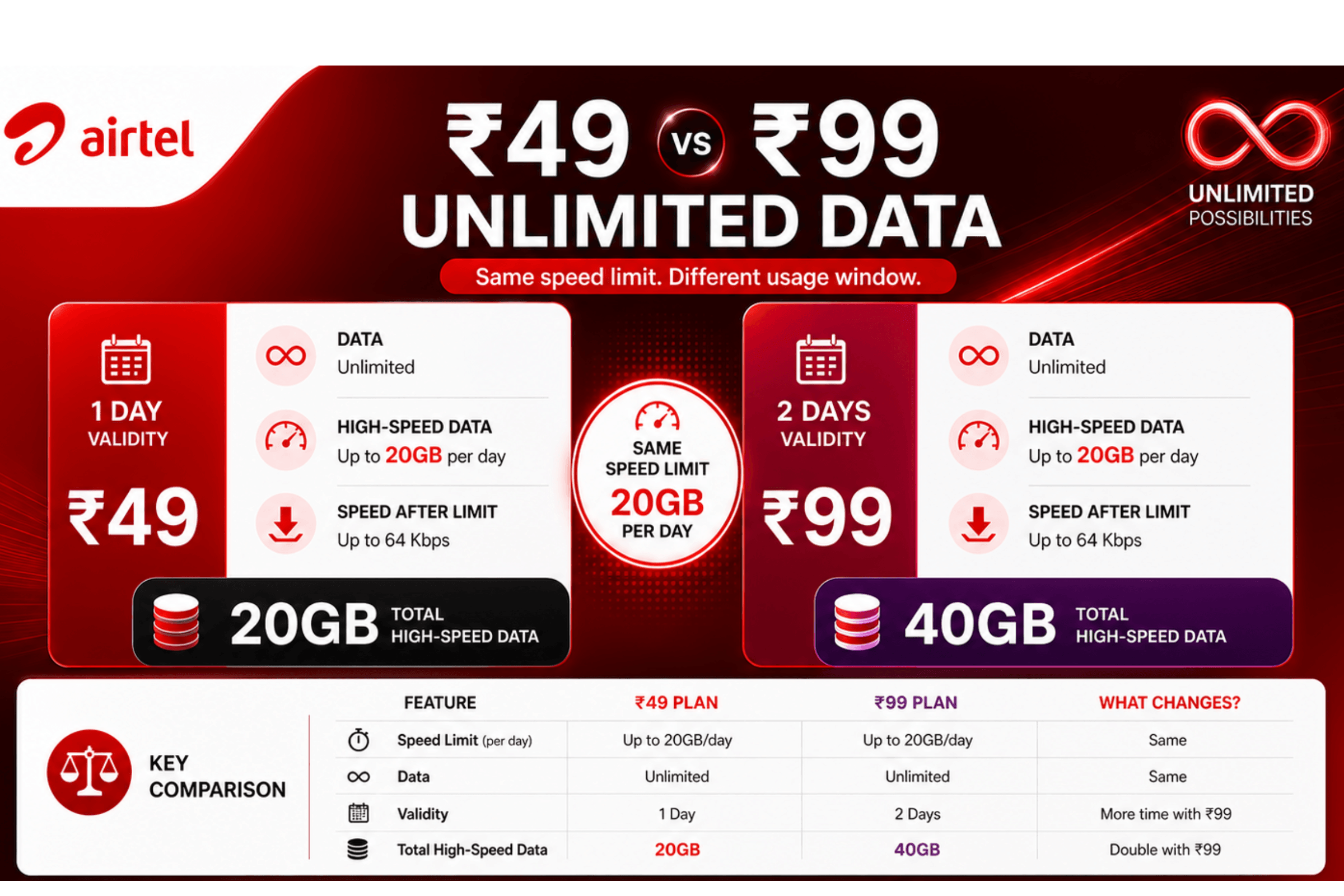
At the core, both packs offer unlimited data access with a defined high-speed usage threshold. The key difference lies not in the data structure, but in how long users can access it.
The structure of these plans highlights an important shift data pricing is no longer just about how much users get, but also about when they need it.
In practical terms, both packs deliver the same high-speed experience within a given day the difference lies in how users distribute their consumption. A user with a one day requirement such as streaming an event, downloading large files, or handling a work-heavy schedule can opt for the Rs 49 pack. Those with extended needs can move to the two-day option without changing their broader recharge strategy.
This duration-led design reflects how data consumption has become increasingly event-driven. Instead of steady usage spread across weeks, users now consume data in bursts tied to specific activities.
Short-Term Packs in a Changing Data Landscape
India’s mobile data ecosystem has evolved rapidly over the past few years. Streaming platforms, live content, gaming, and cloud-based work have all contributed to more dynamic consumption patterns.
These patterns are not always predictable users may require large amounts of data for a short period and significantly less at other times traditional prepaid plans, built around fixed daily limits and longer validity cycles, do not always cater to this variability.
Airtel’s Rs 49 and Rs 99 packs fill that gap they act as targeted boosters, allowing users to handle high-demand scenarios without committing to a higher-priced plan. This flexibility is becoming increasingly relevant as digital usage continues to diversify.

Structured Unlimited, Not Open-Ended Usage
While both packs are marketed as unlimited, the underlying structure is clearly defined. Users get access to high-speed data up to a certain threshold each day, after which speeds are reduced.
This model ensures that users can access substantial data volumes when needed while maintaining overall network stability. In a market where data consumption is among the highest globally, such structured usage models help balance user experience with performance consistency.
Rather than offering unrestricted access that could lead to congestion, Airtel’s approach provides predictable performance within a defined usage framework.
A Strategy Built Around Real Usage
What makes these packs particularly interesting is how they align with real-world usage patterns. They are not positioned as replacements for base plans, but as complementary options that enhance flexibility.
For users, this means greater control instead of upgrading an entire plan, they can selectively add data capacity for short durations. This is especially useful for segments such as students, gig workers, and remote professionals whose data needs fluctuate.
From a strategic perspective, this also allows Bharti Airtel to monetise high-demand usage windows without disrupting its core pricing structure.
Backed by Strong Subscriber Momentum
According to the latest data from the Telecom Regulatory Authority of India, Bharti Airtel added 5,094,968 wireless subscribers in March 2026. This takes its total wireless subscriber base to 477.74 million, translating to a market share of 37.74%.
Also Read: Bharti Airtel Adds Over 5 Million Wireless Subscribers in March 2026: TRAI Data
These numbers indicate that Airtel’s approach continues to resonate in a highly competitive market while pricing remains a factor, relevance and flexibility are increasingly shaping user choices.
Rethinking Data Pricing Around Usage Patterns
The comparison between Airtel’s Rs 49 and Rs 99 packs offers a glimpse into how telecom pricing is evolving it is no longer just about offering more data at lower prices, but about structuring access in a way that matches how users actually consume it.
By focusing on duration rather than just volume, Airtel is introducing a more modular approach to prepaid data. Users are no longer locked into rigid consumption patterns; instead, they can adapt their usage based on need.
The Future of Flexible Data Usage
Bharti Airtel’s Rs 49 and Rs 99 packs may appear as simple additions to its prepaid portfolio, but they reflect a broader shift in how data is being packaged and delivered the emphasis on short-term flexibility, structured high-speed access, and usage driven design suggests a more nuanced understanding of modern mobile consumption.
As data usage continues to evolve, such targeted offerings are likely to play a larger role – not just as add-ons, but as indicators of where the industry is heading.
Found this useful? You can support us.
 Support Telecomtalk