




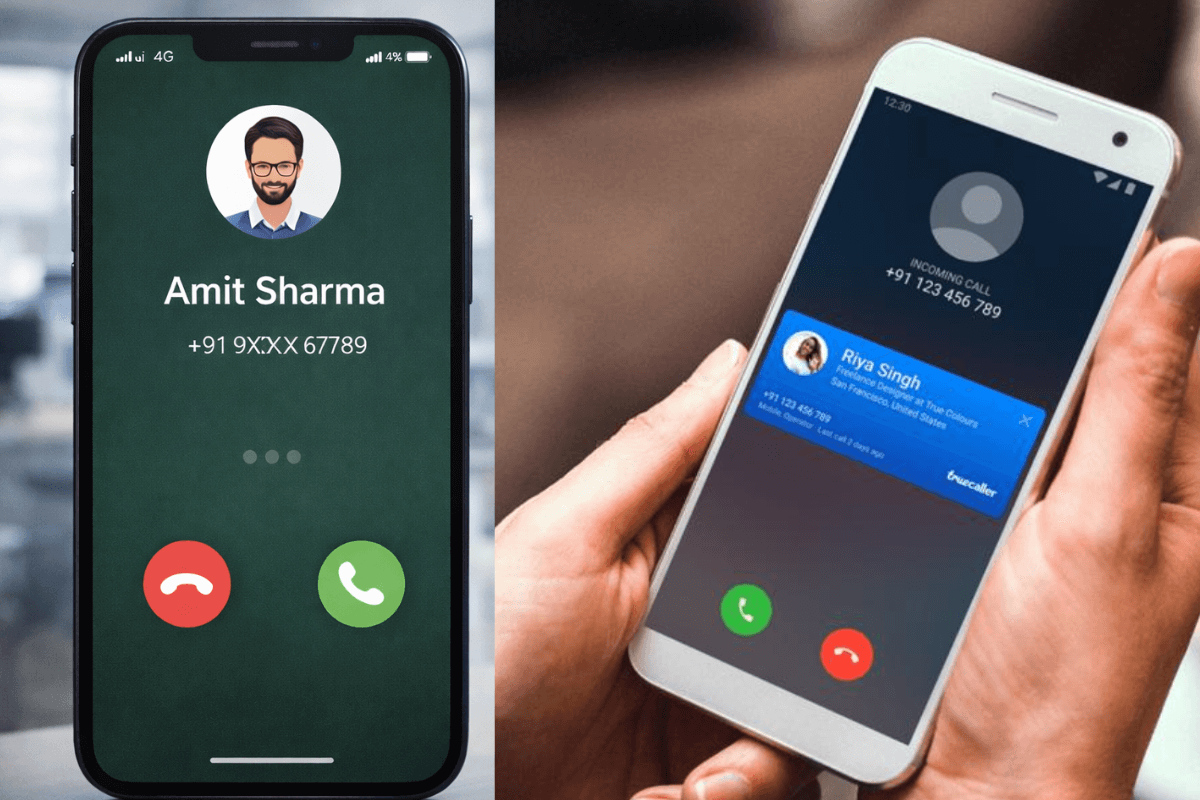
 For years, identifying an unknown caller in India has largely depended on third-party apps. From spam alerts to caller names, applications such as Truecaller became the default layer of trust for millions of mobile users. That model is now being challenged by a system built directly into telecom networks.
India’s Calling Name Presentation (CNAP) framework, combined with stricter SIM-binding rules, signals a shift in how caller identity is verified moving it away from crowd-sourced databases and into operator-controlled infrastructure.
Also Read: Jio, Airtel, Vi Need to Implement CNAP By March 2026: Report
What CNAP changes at the network level
CNAP displays the registered name of the caller, sourced from telecom KYC records collected when a SIM is issued. The information is delivered directly through the mobile network at the time of an incoming call.
Unlike app-based caller ID systems, CNAP does not rely on internet connectivity, contact syncing, or user-generated labels. The name shown on screen reflects the identity recorded in official telecom databases, making it harder to disguise or manipulate.
The objective is simple: ensure that caller identity is verified before the call reaches the user.
CNAP is already live in multiple circles
While CNAP is still expanding nationally, telecom operators have already activated or tested the feature across several regions. Reliance Jio has the widest live footprint, with CNAP enabled in West Bengal, Kerala, Bihar, Uttar Pradesh East and West, Rajasthan, Punjab, Assam, Uttarakhand, Himachal Pradesh, Jharkhand and Odisha.
Bharti Airtel is testing CNAP in West Bengal, Gujarat, Madhya Pradesh, Maharashtra and Jammu & Kashmir.
Vodafone Idea currently has CNAP live in Maharashtra, with a partial rollout underway in Tamil Nadu.
BSNL has reported limited availability in West Bengal, indicating early-stage deployment.
The staggered rollout suggests operators are validating accuracy, network performance and user experience before wider expansion.
Why the government is backing CNAP
The push for CNAP comes amid rising concerns around phone-based fraud, impersonation scams and misuse of Indian mobile numbers. Regulators have pointed out that many scams exploit weak identity visibility and the ability to operate messaging apps even after discarding SIM cards.
Also Read: Truecaller Launches Free Voicemail for India
CNAP addresses identity at the call level, while SIM-binding closes operational loopholes. Under SIM-binding norms, messaging apps will work only if the original SIM used during registration remains active in the device. If the SIM is removed or changed, the app will require re-verification. Web and desktop logins will also undergo periodic checks.
Together, these measures aim to make misuse more difficult and traceable.
Where Truecaller fits in this new landscape
Truecaller has played a critical role in India’s spam-control ecosystem, particularly through crowd intelligence and spam detection algorithms. Its strength lies not just in names, but in analysing call patterns and tagging suspicious activity.
CNAP does not eliminate this role. Instead, it redefines the baseline. Caller identity the name linked to a number now comes from telecom networks. Apps like Truecaller may increasingly focus on value-added intelligence, such as spam probability, business verification, fraud trends and premium services.
In effect, identity shifts to the network, while analysis remains with apps.
A structural shift in how trust is built
CNAP marks a broader policy direction embedding trust directly into telecom infrastructure rather than layering it through external platforms. For operators, this increases the importance of clean and accurate subscriber records. For users, it promises clearer visibility into who is calling. For the ecosystem, it signals a move away from loosely verified digital identities.
As CNAP expands circle by circle, its success will depend on consistency, privacy safeguards and seamless implementation. But the direction is clear: India wants caller identity to be verified first by networks not guessed by apps.