

Many people (including me) dislike 3G for the fact that it has low caps, varying speeds, bit high latency and lastly super expensive. Well, all that is true, but still 3G makes lot of sense.
How ?
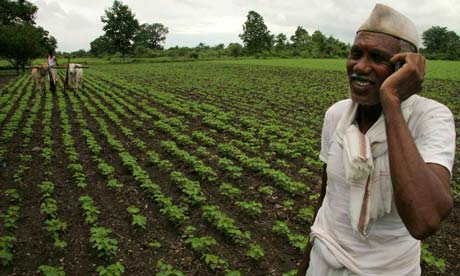
Today I had a very interesting experience where I saw a farmer siting next to me in bus and looking into commodity prices in cell phone’s web browser! (wow!)
Well that was really interesting. I could feel how technology is going in the grass roots of India & eventually changing life of rural India. He was not using 3G, but it was 2G running on a average (I guess ~5000Rs) cell phone.
It has no direct relation with 3G, but I believe we will see more similar things in future. I am quite sure most of farmers of his age/level probably don’t have computer at home due to cost as well as complexity of a computer, while he was able to do “what was required” using simple GPRS on phone.
I kept on looking at him for a while, and couldn’t resist asking him – how he learned to use Internet on cell phone? His reply was – I don’t know anything about computers but a kid from village set the phone in some manner that when he presses 0, he gets latest commodity prices”.
I realized that someone probably set a commodity price site as “homepage” and told him press 0 for long time (Nokia homepage shortcut!) and he was able to view prices – neat & simple!
I myself have used a number of operating systems including various flavors of Linux, Windows etc and the simplest one I saw was chrome os (in cr48) and I think that’s still way too complex then a simple “press 0 and done” type interfaces.
Thus, we see one of biggest problems in India is not really slow broadband speeds, or capped connections. It’s very poor PC penetration, and major factor for that is cost as well as complexity. As cell phones are getting more “smart”, we are getting very good solution for that problem.
I agree that most of such cheap cell phones have very limited functionality and we can’t really compare them to computers, but point is – those devices can do “required work” so beautifully for low rate. There are still many limitations on such devices and one of prime one remains slow Internet speeds giving bit poor experience to end user. Here 3G can really do the magic.
It’s correct that spectrum allocated in India is very low as compared to demand/requirement but still for such rural areas which are totally out of PC penetration, cheap 3G phones can do a lot. And eventually we will see more and more tablets based on open source OS like android in range of ~4000-5000Rs.
Such devices can do a lot in bringing “Internet experience” in rural India. Mass adoption of wireless computing devices will eventually lead to very high demand in data usage and will help in bringing prices down for existing users also (on fixed broadband networks).
It is very unfortunate that too much delay and super hype created by Indian media about 3G, actually disappointed a number of end users who expected super cheap 3G services as they enjoy 2G based data plans. At this point we really need to understand the potential and limitations of technology.
Here’s what to expect from 3G:
1)It is not meant as alternate for fixed broadband in (big) cities. No, not at all!
2)Allocated spectrum of 5Mhz in 2.1Ghz band isn’t something technically very good in terms of wave penetration as well as capacity. Limited capacity leads to low usage caps, and eventually expensive data plans.
3)3G is quite good if one if looking at it as an alternate for slow 2G connections which were mostly used on cell phones.
4)3G is quite good for Rural areas where demand is still very low, and using 3G, one can have very low cost deployment which is almost impossible for wired broadband networks.
5)Current prices of 3G plans is quite high, and low spectrum availability followed by aggressive bidding is responsible for it. Don’t expect any significant change in price for around an year.
6)3G is not just about data, but about capacity & such additional (few x times more) capacity can be used for voice also. That’s where 3G will help in big cities to operators who already have quite limited spectrum left in 2G for voice telephony.
And at the end good thing is – despite of high spectrum costs, we can see operators are still quite active in deploying 3G. It has been less then an year, and many cities are already covered. BWA still seems bit far mostly due to the fact that Mobile WiMax seems outdated choice while LTE is yet not mature enough.
There has been no standards in LTE for carrying voice telephony on completely IP based backhual as well. LTE will have few times more capacity then 3G, thus we can expect better pricing plans, but again main magic of LTE will also be mass adoption in form of small tablet PC’s etc and not really as fixed broadband alternate where one expects ~50GB a month usage for reasonable price.
(That’s all from me for now. Will look forward towards your comments & questions!)
With hope to see a farmer streaming Youtube videos soon, time to say bye!
Picture Courtesy : Guim.co.uk

PD July 7, 2011 at 4:38 pm
You put it VERY correctly, Anurag. Even when I brought this fact to the notices of this inconsistencies to the concerned, the personnel/engineers knowingly or unknowingly showed (feigned) ignorance! No action or response and since then my 2 BSNL sims are lying idle. I agree with you 100%, for we can not write off the usefulness of GSM/2G, especially when referred with the subject matter of your postings, i.e. Potential of 3G in India. Let the people experience themselves – both 2g and 3g simultaneously before and opting 3g based on their priorities. At the same time the service providers should promote 3g too with greater speed else we can’t imagine to board 4g bandwagon, right ?
Anurag Bhatia July 7, 2011 at 4:50 am
Rough fact – higher band = high attenuation = low coverage
but remember – high band = high bandwidth + (low wavelength) = low tower size.
Low coverage factor of 3G (as compared to 2G) varies a lot, and isn’t the whole story. With existance of so many tower companies, towers is not an issue at all in Urban India, but yeah in Rural + highways it matters.
Anurag Bhatia July 7, 2011 at 12:33 am
@PD
Interesting. Must be due to ignorance and poor quality of work done on outsourced model from BSNL’s partners. In India they need dual mode support for long long time. I don’t think we will see GSM going off anytime soon in near future. Lot of rural areas, highways etc will stay on 2G and hence dual mode will play a important role to ensure connectivity. In my personal experiences with most of 3G networks – I saw there is problem with handovers. Calls are often dropped when you run out of 3G to 2G area. Most likely such issues will be fixed in near future.

PD July 6, 2011 at 11:55 pm
@Anurag Bhatia
Yes, in fact, I had made a lot of representations to the local BSNL HQ (Raigad Dist. Maharahstra) for installing a 3G unit in the nearby exchange and also opted for 3g capable sims for my pyari jodi and one old bsnl sim. Interestingly, I had to break my head even for converting the 2g sims to 3g for the existing system (at Pune) was not adaptable forconversions of older number series. Finally bsnl made it possible on my continued persistence. And lo…as I said in the beginning after a series of efforts 3g system was installed (that works only on HSPDA handsets). My nokia 6233 will work if kept in UMTS mode (not on dual mode) but then won’t accept signals of 2g , no calls. N70 will not accept the 3G signals in the DUAL MODE. Fortunately by the time vodafone too started their 3G service and am able to access 3g services in these handsets(2g/3g). However, video calls are used sparingly because of prohibitive cost of video calling costs of vodafone (Rs.3/- pm, like other pvt. operators) as against BSNL’s Re 1/- or so. I am in dilemma. Perfect CATCH-22 situation. Definitely I don’t want to go for a HSPDA sets now for obvious reasons.
sam July 6, 2011 at 8:50 pm
@Arjun
The problem with 3G is that it is deployed in a higher frequency range(2.4ghz/2.1ghz i am not sure). where as 2g is in 900/1800mhz spectrum. higher frequency means lower coverage radius.
Anurag Bhatia July 6, 2011 at 8:00 pm
@Arjun Chandrashekar
It’s not about just the number of towers you need – many more parameters are need to be addressed. In big cities like Delhi, there isn’t any problem in number of towers at all. A number of independent tower companies have towers across the city, and cell phone companies can easily lease those. It’s easy for them as additional capacity provided by towers makes it very much feasible to leased extra towers for spectrum re-use. HSPA does need more towers but it also increases capacity of system few x times.
Hope that clears out.
Arjun Chandrashekar July 6, 2011 at 7:36 pm
@Anurag Bhatia
Well This Bad Idea Was Provided By NTT DOCOMO,Who Was The Idiotic Operator In Japan Developed This Technology. By This Technology Even The 2G Based Mobile Towers Started To Give Worst Indoor Coverage. Very Bad Idea By Docomo. Even I Didn’t Understand Why They Are Called The 3G Leaders. In Malaysia Maxis Is The Telecom Operator Having Thick Coverage With 3G Technology i.e. It is Working In W-CDMA.
Anurag Bhatia July 6, 2011 at 6:10 pm
@Arjun Chandrashekar
CDMA – yes, WCDMA (which has just CDMA in name, but is much more close to GSM family) – No.
And now the latest HSPA based network needs many more towers. Earlier if they were on say 3 towers for an area, now they need 5! (rough idea…)
Arjun Chandrashekar July 6, 2011 at 3:08 pm
@bharathkumara
Ok. But Is It True That W-CDMA Covers More Area When Compared To Gsm?
Anurag Bhatia July 6, 2011 at 2:10 pm
@shibu sam
It’s sad that you are trash talking. Firstly he was farmer, secondly point of whole post is not whether he was farmer or not, but was to tell how (existing) 2G wireless internet is reaching grass roots of India, in which computer failed. Hope that clears out.
Thanks!
Anurag Bhatia July 6, 2011 at 2:08 pm
@heera
CDMA was overall quite better technology as compared to GSM, just didn’t picked up much due to number of issues. As of now we can see GSM based 3G in form of HSPA+ while CDMA based 3G in form of EVDO. I guess right now EVDO has better coverage then HSPA because HSPA network are in process of built, but sooner HSPA will be dominant, and the end both GSM & CDMA converge at LTE
shibu sam July 6, 2011 at 1:12 pm
“”"Today I had a very interesting experience where I saw a farmer siting next to me in bus and looking into commodity prices in cell phone’s web browser! (wow!)”"”
This is real crap… may be he is not a farmer, may be an agent or businessman in a village, dont call him a farmer
saurabh jain July 6, 2011 at 4:50 am
Yes true said, Edge is quite affordable with Rs65 for 2.5GB, In android smartphone it is quite helpful , i go to villages , where 3G network is not available , i hv to check my mails and news etc, all is done by quite affordable using edge of docomo.
3G is quite fast and sites load up very fast due to better latency. now a days who watched video on 3G , cable on 3G , nobody. If u try to watch then battery sucks
heera July 6, 2011 at 12:18 am
What about your views regarding CDMA division like internet service provided by various operators……
Jai July 5, 2011 at 10:09 pm
3G no mean at villages in india but 2G most useable band in ruler area because it is low cast & full enjoy with better covreage and good speed.
3G next 5years go to 75% covreage but 2G at present 100% best covreage.
bharathkumara July 5, 2011 at 9:23 pm
@Anurag Bhatia
my point is if 3G is high cost then usage is harder in rurals, farmers also all of them all poor, they except less cost for more speed, EDGE is better to use with same gprs plan, GPRS/EDGE is low cost, but 3G is much high, then it take time to use 3G in rurals, when they deploy ecosystem tovers, then they gave low cost for rurals only, may be 2g gprs started in 2002, then the gprs mobile is 10k-15k.. but now in 2010-11 we can get 3k.. then 3g mobiles are 5k-20k, but 3G taken to work on rurals in 3-5years, this is my analyze about 3G, then now also some of them are using EDGE, but 3G is 2-3year to taking time to rule india…
Anurag Bhatia July 5, 2011 at 8:38 pm
@Nikkheil jain
EDGE is OK for basic browsing, but fails for videos and we all know video will play an important role.
@Rudradeep
Not sure if they will really not not. Let’s see.
I guess most of ecosystem/content will be from “misc” sources rather then any player bringing all that together. Also, very poor penetration of 2.3Ghz will make it more harder then 3G to deploy in Rural area.
Let’s see how it goes!
Rudradeep July 5, 2011 at 8:33 pm
what actually we are looking for is more local information. operators and 3rd party vas operators should make more local info available over network. it is all about an eco-system, which is expected to be unleashed by bwa winner infotel.
Nikkheil jain July 5, 2011 at 8:26 pm
Actually what i think 2g can alone serve the purpose here,though bit slow but edge network are quite fast as compare to gprs and fast enough the serve the demand of farmers.The only thing which must be look upon is the steps to be taken to educate farmers how to use wap services and moreover,one can now get an edge enabled handset within 2.5k or less.
Anurag Bhatia July 5, 2011 at 7:43 pm
@Shyam
Except 2nd last one. lol!
Thanks!
Shyam July 5, 2011 at 7:01 pm
Anurag
Your articles are always informative.
Anurag Bhatia July 5, 2011 at 7:01 pm
+1
Saurabh July 5, 2011 at 6:38 pm
Nice share, Anurag. Reminds me of older days(2005-2006) when I use to do same for people of my town who were unaware of all this. At that time a simple GPRS handset use to cost between 6K-8K. But things have completely changed now. With handset price going down and availability of USB dongles, I’m sure 3G will be a hit not just for techies like you or me but for those also living in small towns and villages. As far as price point is concerned GPRS/EDGE was also costly initially (600-900 per month) and almost after 6-7 years of its launch, it’s affordable for all. Hope 3G won’t take too much time to become cheap.
Anurag Bhatia July 5, 2011 at 6:28 pm
Never heard of such case before. If it’s so – then yeah, it’s bad.
Will take time. Early adopters will eventually bear initial heavy costs before technology comes in reach of mass users.
That’s because of super high cost operators paid to get spectrum. It will take quite sometime before costs come down.
siddharth July 5, 2011 at 6:05 pm
3g is tooooooo costly then cdma !
linusr July 5, 2011 at 5:53 pm
Price is the deciding criteria.. 3G will go nowhere till them
long live GPRS
PD July 5, 2011 at 5:47 pm
Definitely only BSNL has the intention, potential and commitments for those in rural areas and for them it very easy too because they have formidable infrastructures built since long. They are now changing over to 3G from 2G networks in rural areas too. But there is a catch. Many of the new system installed in exchanges does work only in UMTS mode (HSPDA) and not on DUAL mode. Many of the masterpieces of nokia like, 6233 and N70 have the ability to receive the signal of 3G with limitations. However the MTNL has taken care of this and it works on umts,dual modes. The BSNL needs to attend this limitation to speed up 3g penetrations.
Anurag Bhatia July 5, 2011 at 5:47 pm
Hi Rakesh,
High tariff is because of high spectrum cost they paid in aggressive bidding, and bidding was aggressive because available spectrum was very less! We can see none of them got slots at pan India level. Not in very near future, but eventually prices will drop – firstly more and more penetration, followed by BWA operator’s competition, and next little more spectrum (25Mhz more!) allocation will make things better.
Only problem will all this is – we are just “a bit” late with 3G!
Rakesh July 5, 2011 at 5:35 pm
Owsam!
3G ,MORE NÈDED IN RURAL AREA BT SERVICE PROVIDER’S HIGH TARIF PLANS SUCKS MAN. . . .
I m a bsns3g user